
At ten o’clock at night, the Mercedes Riverblock sounded almost musical.
The vineyard was dotted with tiny headlamps, and the clipping of shears traveled farther than the light. On one side, experienced vineyard workers moved so quickly that my eyes could barely keep up with their hands. Elsewhere, Lisa and Trini Amador, the owners of Gracianna Winery, welcomed me with shears in their hands and the promise of a fun conversation.
On Westside Road outside Healdsburg, Gracianna puts its philosophy somewhere you have to encounter it before drinking: the cork. It asks, What are you grateful for?
I had come back with a rather hands-on answer.
Two days earlier, I had tasted the Mercedes Riverblock Pinot Noir and responded by asking whether I could help harvest it. Fernando Arellano, Gracianna’s hospitality manager, said yes. My enthusiasm had apparently been sufficient; my ability to use shears remained unexamined. Curiosity, I have learned, travels well in wine country.
I was not entirely sure what I was asking for. I only knew that I wanted to touch the grapes behind the wine I had tasted minutes earlier. As a writer, I thought being in the vineyard might give me something new to work with. As a prospective vineyard worker, I had considerably less to offer. They made room for me anyway.
Gracianna began with curiosity that had also got a little ahead of permission. Lisa and Trini’s son was fifteen when they discovered him making Pinot Noir in the family garage. They discarded the wine and told him that if he was serious, he would need to learn properly. Three months later, he had found an internship. The wine had been disposed of. The winemaker was proving harder to discourage.
The experiment did not end in the garage. His interest drew the rest of the family into winemaking, first by learning alongside local growers and producers, and eventually through small lots of Pinot Noir and Zinfandel of their own.
When the family needed a name for what they had built, they returned to the women who had shaped it long before there was wine. Gracianna honors Trini’s great-grandmother, Gracianna Lasaga, whose lessons about gratitude stayed with him. The Mercedes Riverblock carries the name of his paternal grandmother, Mercedes Siordia Amador.
The first lesson of harvest was considerably less poetic: do not clip your fingers.
The instruction reached me from different parts of the vineyard, usually followed by laughter. Several people seemed invested in my returning with the same number of fingers. I shared their concern.
The experienced vineyard workers moved from cluster to cluster with a speed I could admire but could not borrow. I had a more elaborate procedure: locate the fruit, locate the stem, account for every finger, then clip. There is a considerable distance between knowing you love Pinot Noir and being useful to it.
Every so often, I stopped to taste a grape. I held the cluster in one hand, pulled away a berry and bit directly into the sweetness that would eventually find its way into a bottle.
Wine has always been deeply sensory to me. I understand it through the things it resembles—a familiar texture, a particular kind of weather, a memory that returns before I have found the words for it. Occasionally, a person I should probably stop using as a tasting note. I am usually searching the world for something that will help me explain what is inside the glass.


In the vineyard, that movement reversed. I was holding the source of all those comparisons in my palm.
The grape had not yet been crushed or fermented. It had not met a barrel or been handed a list of flavours it was expected to resemble. It was cold, sweet fruit beneath the moon. I could taste it before I had to explain it.
For once, wine did not remind me of anything else.
It tasted like its own beginning.
I had arrived with questions, although I was unsure how many an invitation to harvest entitled me to ask. The vines offered a kind of veil. With our hands occupied and our faces partly hidden by leaves and darkness, asking felt easier. I could be curious without making anyone feel interviewed.
Wine lends itself to all kinds of conversation, even those that draw our minds away from the very grapes keeping our hands occupied. Somewhere amongst the deepest vines, Lisa and I began imagining Sauvignon Blanc as a person. Her's was more otherworldly and smart, mine liked linen and Bleu de Chanel.
There was also the matter of what we were standing on. According to Gracianna’s account of the vineyard, the Mercedes River block was once part of the Russian River’s bed. The soil is mostly river-deposited silt, with some clay, sand and gravel. During some wet winters, while the vines are dormant, the river floods the block again.
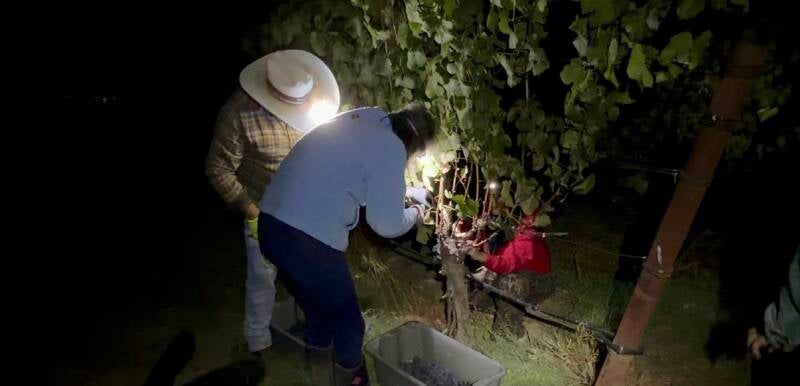
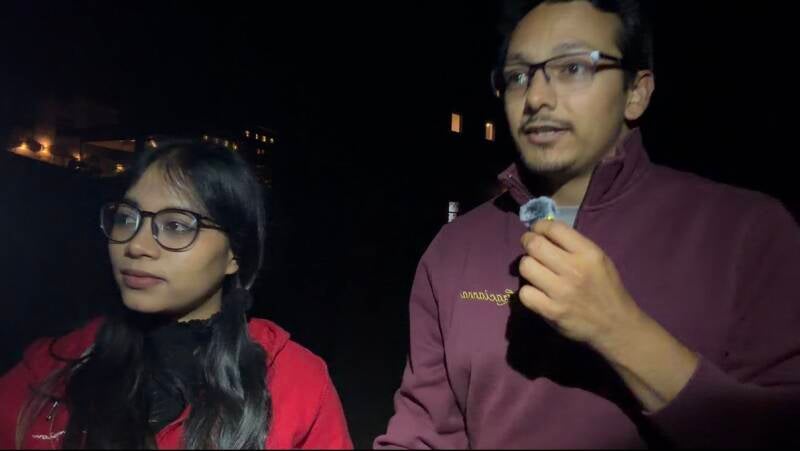
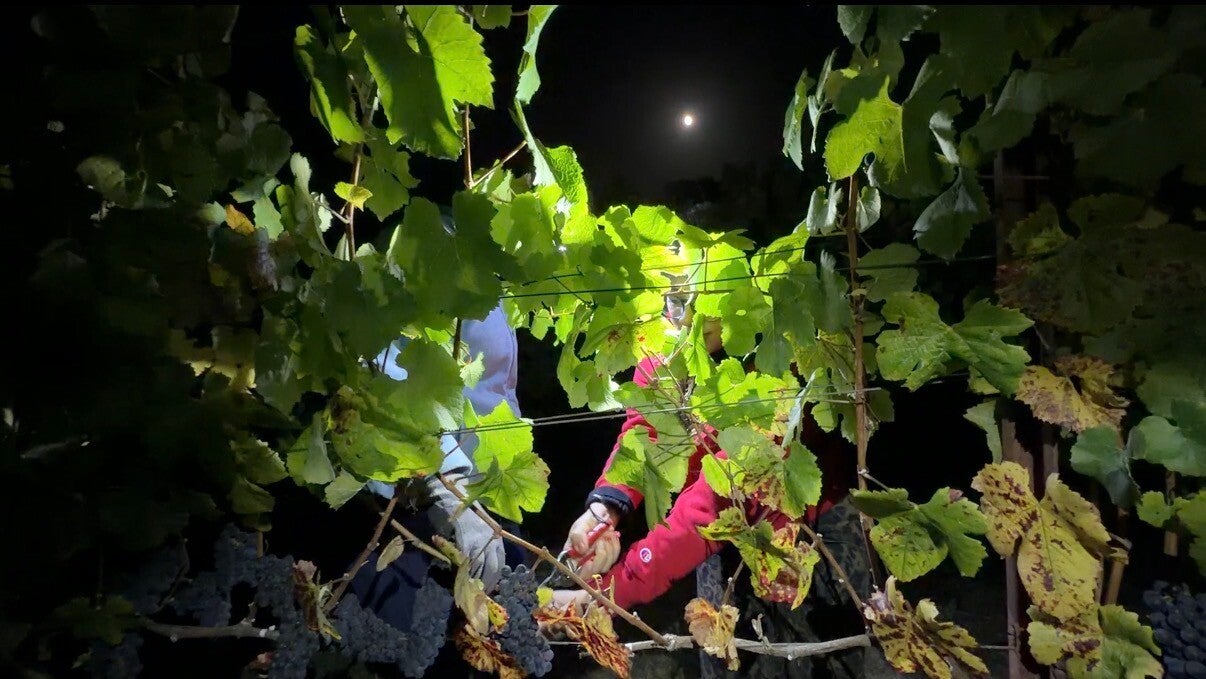
The block is planted to Dijon clone 115 at what the winery describes as the threshold of the Middle Reach. Morning fog gives way to warmer afternoons—a daily shift between coolness and ripening warmth. Gracianna describes the wider Middle Reach style in terms of cherry, wild strawberry, cola and spice, with velvety tannins. Those are useful words. Knowing that the river had helped lay down the soil gave me something else to consider the next time I lifted a glass.
Eventually, someone told me that when my back began to hurt, I should stop. My back was already making its position clear. I had described the experience as meditating, however, and was apparently prepared to accept the uncomfortable seating.
I do not know yet what the 2026 Mercedes Riverblock Pinot Noir will taste like. There is fermentation, aging and plenty of work ahead of it. Two days earlier, I had encountered Mercedes as a finished wine. Now I was curious about a vintage I had met as fruit, besides the people who would see it through.
We drink wine much faster than it is made. I had finished my tasting before I knew about the fifteen-year-old in the garage or the grandmother whose name belonged to the block. Now I had spent a small part of one night inside a story the Amadors had been working on for years.
I came to this country as an international student because I wanted to understand wine. I could study growing regions and practice tasting, but I could not arrange this part on my own: somebody had to let me into the vineyard. Fernando had taken my question seriously. Lisa and Trini had welcomed me with shears already in their hands.
By the time I left, I wanted to do another harvest. My back had not been consulted.
Someday, someone will open the wine we picked and find Gracianna’s question waiting inside the cork: What are you grateful for?
I'll have several answers. The fact that they trusted me with shears is still amongst them.
Add comment
Comments