If tomorrow were humanity’s last day, I’m convinced wine people would eventually find each other at Chappellet.
Because the tasting room looks like it was built to survive whatever ended the rest of civilization.
The drive up is exactly what you expect Napa Valley to be. Vineyards rolling over impossibly beautiful hills. Trees posing for photographs. The sort of landscape that has appeared on a thousand postcards and convinced a thousand more people to book a flight.
Then you reach the tasting room.
The building looks like the kind of place you’d stumble across after civilization had politely collapsed. A mysterious, impossibly calm structure hidden among the oaks, where the last remaining people have decided that the only sensible thing left to do is open a bottle of Cabernet.
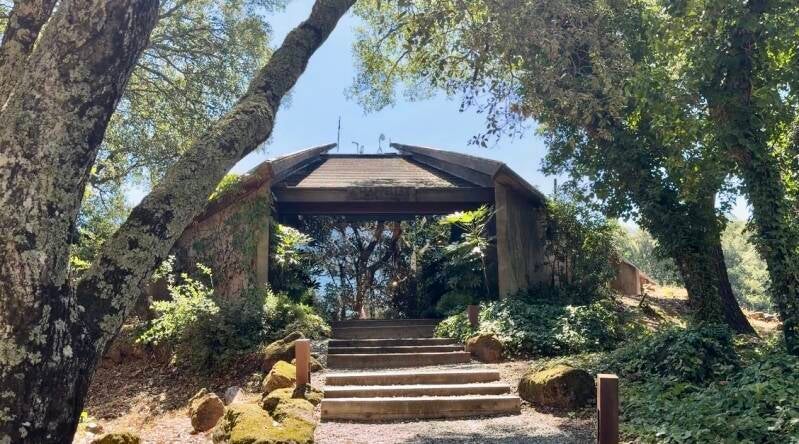
And how right they are.
As you walk toward the entrance, you half expect someone to ask for your retinal scan or quietly say, “We’ve been expecting you.”
Instead, you’re greeted with a glass of Chardonnay.
It is, without question, one of my favourite winery entrances in Napa.
That contrast had me in a bind throughout the visit. The building feels almost otherworldly, but the hospitality couldn’t be more grounded. Before anyone talked about vineyard blocks or clones or elevation, they made sure I felt welcome.
And that is the real luxury of wine country. You can build the most extraordinary tasting room on the side of a mountain, but if the hospitality doesn’t make you want to stay, the view can only do so much. Wine becomes far more interesting when the people pouring it make you feel like you belong at the table.
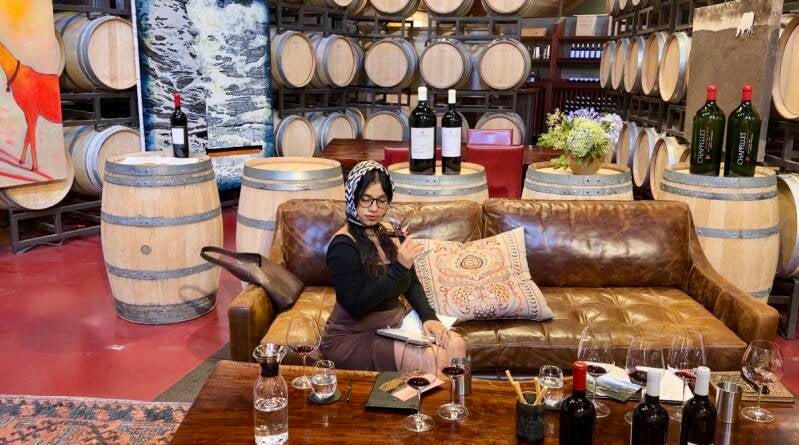
Beyond the host stand lies what they call The Cathedral—a barrel room that smells of oak, wine and a lot of love. I know I have compared wine-centric places to churches far too many times, but here I truly closed my eyes and breathed in deep lungfuls of oak-scented air.
And then the winery opens itself to the mountain.
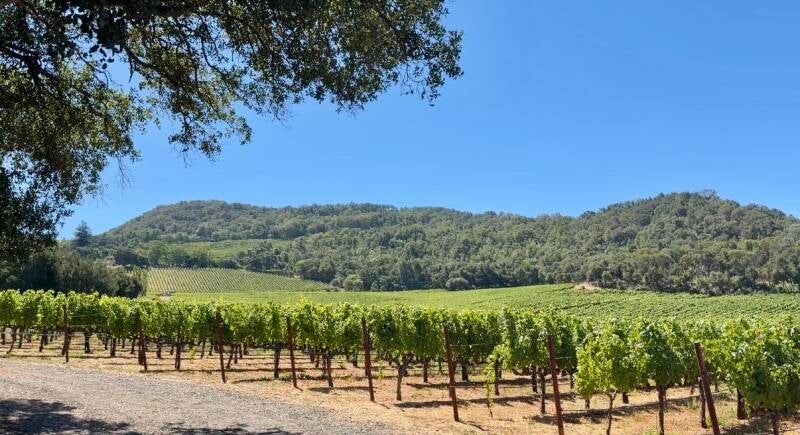
Pritchard Hill is annoyingly beautiful.
The vineyards spill down the slopes, framed by ancient oaks, with the lake quietly catching the afternoon light in the distance. I was told that in spring the hills are painted with mustard flowers and California poppies, the image arrived so immediately that for a second I could almost see them there. Even the vines seemed impatient this year, already ripening weeks ahead of schedule.
There is something appropriate about Chappellet sitting up here.

Long before mountain Cabernet became one of Napa’s great calling cards, this place was built around a belief in what these slopes could do.
The Chardonnay opened with honeysuckle and golden apple before finishing with a freshness that kept pulling me back into the glass. For people who think Napa Chardonnay automatically means butter and oak, this is the bottle I would quietly place in front of them and wait.
Bright, floral, and dangerously easy to drink on a hot afternoon, preferably with farm-fresh fruit and absolutely nowhere else to be.
We walked back inside with our empty glasses, through the towering rows of barrels, until the room opened onto something straight out ’90s wine romance novel - moody, intimate, and arranged with the confidence that suggested the wine already knew it had you
But what caught me most was the fruit.
Mountain Cabernet is so often described through its power—the tannins, the rocks, the altitude, the struggle of the vines. Here, the fruit felt almost rebellious against that stereotype. It was juicy. Generous. Seductive. So unexpectedly un-mountain-like that I had to go back for several more tastes.
Academic curiosity, after all.
Then came the 2022 Pritchard Hill Cabernet Sauvignon.
It melted straight into my body and rose through my chest like a wine-drunk confession that had suddenly become urgent.

You can smell the sun in the glass, alongside dark berries practically begging for attention. It reminded me of someone arriving to pick you up for dinner in a sleek black car. They roll down the windows as you get in and, for a second, you smell the leather and feel all that trapped mountain air rush toward you at once.
By the time we finished, the afternoon had slipped away somewhere between several increasingly necessary revisits to the Cabernet.
That is the danger of Chappellet. The architecture looks as though it belongs to the future. The barrel room feels almost ancient. The mountain is wild. The wines are enchanting. Everything should contradict itself, and somehow nothing does.
If you are looking to be completely consumed by a wine-filled afternoon, I would highly recommend disappearing up Pritchard Hill for a few hours and letting Chappellet do its thing.
And if you end up leaving with more than two bottles of Cabernet, you can, of course, go back to the Cathedral and confess.
Add comment
Comments